Scripture Passage
Overview
Have you ever noticed the food at a wedding? Wedding food is usually pretty fancy. It’s quality over quantity. People spend a lot of money and pay attention to detail because weddings are a really big deal. For many, weddings are a status symbol and it has been that way for a long time. Today’s lesson is about a wedding where things go from amazing to bad and a couple’s reputation is about to be ruined.
Opening Activity: Name That Tune
Supplies needed: media player
Make a playlist of Sabbath appropriate songs. Play a short snippet of each song and have your students guess what the song is. Be creative: choose some old favorite hymns, some that people don’t usually play anymore, and some current songs.
Questions
- How difficult was it to identify the songs?
- Which songs were the easiest to identify?
- What characteristic makes a song identifiable?
- What is your favorite Christian song, and why do you like it?
Transition
Imagine you have spent months getting ready for your wedding. You have left nothing to chance. Everything is in place. However, half an hour into the reception, you discover that the caterer didn’t bring enough food for all the guests. How would that make you feel? What happened in our lesson today was just as bad, maybe even worse.
Bible Study Guide
Read John 2:1-3.
1 On the third day a wedding took place at Cana in Galilee. Jesus’ mother was there, 2 and Jesus and his disciples had also been invited to the wedding. 3 When the wine was gone, Jesus’ mother said to him, “They have no more wine.”
Questions
- Who was at the wedding?
- What did they not have enough of at the wedding?
- What might have caused this problem of running out of wine?
Read John 2:4-5.
4 “Woman, why do you involve me?” Jesus replied. “My hour has not yet come.”
5 His mother said to the servants, “Do whatever he tells you.”
Questions
- What did Jesus mean that His time hadn’t arrived yet?
- How did Mary respond to Jesus? Was her response appropriate and why?
Read John 2:6-8.
6 Nearby stood six stone water jars, the kind used by the Jews for ceremonial washing, each holding from twenty to thirty gallons.
7 Jesus said to the servants, “Fill the jars with water”; so they filled them to the brim. 8 Then he told them, “Now draw some out and take it to the master of the banquet.”
Questions
- What was Jesus’ response?
- How much water in total would have been in the jars?
- When Jesus asked the servants to dip some liquid out of the water jars and take it to the master of ceremonies, what do you think was going through their minds?
Read John 2:9-11.
They did so, 9 and the master of the banquet tasted the water that had been turned into wine. He did not realize where it had come from, though the servants who had drawn the water knew. Then he called the bridegroom aside 10 and said, “Everyone brings out the choice wine first and then the cheaper wine after the guests have had too much to drink; but you have saved the best till now.”
11 What Jesus did here in Cana of Galilee was the first of the signs through which he revealed his glory; and his disciples believed in him.
Questions
- What was the response of the master of ceremonies?
- How do you think the bridegroom felt when he heard the master of ceremonies’ response?
- Why would Jesus choose this as His first miracle to perform?
- What was this miracle really about?
- In what way did this change how the disciples felt about Jesus?
Application
Jesus is always taking care of people. When Jesus turned the water into wine, He didn’t skimp or provide a low quality beverage that would embarrass the bride and groom. He gave them freshly pressed grape juice that was really good. Jesus was giving them a preview of the blood that He would shed on the cross. He gave His all so that we can have a better life than we deserve. When we give to others, are our gifts filled with the same kind of selflessness that Jesus demonstrated?
Follow Up
During the coming week, find a way to help someone else. Many places have been having winter storms, so you could help clean up someone’s yard. Or how about paying for the person’s order behind you in the drive through? Find a way to follow the example Jesus set, by doing something nice for someone else without thought of getting anything in return.
Scripture Passage
LEADER’S NOTE
For a Relational Bible Study (RBS) you’ll want to get into the Scripture passage and encourage the youth to imagine participating in the story while it’s happening. Then you will be able to better apply it to your own situation today.
You will need to ask God for the Holy Spirit to be present as your small group discusses the questions (no more than 3-6 people in a group is recommended). Start with the opening question. It is a personal question and the answer is unique for each individual. There is no right answer and nobody is an expert here, so don’t be surprised when you hear different responses. You are depending on the Holy Spirit to be present and to speak through your group. Say what God prompts you to say, and listen to what others share.
Take turns reading the chapter out loud. Follow that with giving the students some time to individually mark their responses to the questions (a PDF version of the handout is available as a download). This gives each person a starting point for responding when you start to share as a group. Next, begin the discussion by asking the students to share what they marked and why on each question as you work your way through. Feel free to take more time on some questions than others as discussion warrants.
Encourage each person in the group to apply what is discussed to their personal lives and to share with the group what they believe God wants them to do. Then ask them to pray that God will help each of them to follow through in doing so. Remind them to expect that God will show them ways to live out the message of this passage in the coming week, and that they are free to ask others in the group to help hold them accountable.
Overview
We begin Christ’s intense years of ministry, starting with this week’s lesson. Yes, last week had the calling of several of the disciples, and the week before featured the 40-day wilderness experience of battling the devil (we read just three of the temptations at the end of the 40 days).
Depending on which of the four Gospels you read, you’ll have different introductions to how Christ began His ministry.
In Matthew, Jesus called four fishermen to leave their nets and follow Him. They did. Next, Jesus began healing and preaching, which brought big crowds to Him. That led to the famous “Sermon on the Mount.”
If you read from the Gospel of Mark, the same four fishermen were called to be Christ’s disciples, but Jesus then healed and cast out a demon! He also healed a person with leprosy. Then came the healing of a paralytic and Christ publicly forgiving his sins (only God could do that!). Then Jesus called the tax collector Matthew to be a disciple, and from that point on, there was controversy with the established religious leaders who spent their energies trying to stop Jesus.
Luke provides a very different start to Christ’s ministry. Following the wilderness temptation, Jesus attended the synagogue in His hometown of Nazareth. They asked Him to give a little sermonette. He read Isaiah’s prophecy of the promised year of jubilee for God’s people. For His commentary, He claimed the time had now come. But when He mentioned Gentiles, the local Jews had enough, so they tried to kill Him. Christ would have died at the start of His ministry if He hadn’t miraculously escaped their attempt to throw Him off the cliff. Later Jesus cast out demons, healed the sick, preached, and then started to recruit disciples.
Our lesson for this week presents the start of Christ’s ministry from John’s perspective, which differs from the other three already mentioned. Last week we studied John’s version of the first disciples (John 1), namely John, Andrew, Peter, Philip, and Nathanael—five guys. Nathanael is the guy who asked, “Can anything good come out of Nazareth?” Their first stop after leaving Judea on a two-day walking journey was Cana—the next town after Nazareth.
Ask the young people what they remember about the story of Jesus turning water into wine—His very first miracle which kick-started His public ministry. Expect controversy about whether or not the “wine” was fermented. (Hint: the Greek word oinos that we translate as “wine” means “juice from grapes.” They didn’t have vacuum-sealed containers. Wine/grape juice started to ferment right away. It was common to mix water with the wine. How much water? It might depend on how many people showed up!) Some people will remember that Jesus started His ministry with a miracle at a party—a wedding. Jesus is pro-marriage. Jesus pleased His mother. These are the kinds of things that people often associate with this story.
Getting back to the lead-up to what happened in Cana, point out that John 2 picks up the story from last week. Tired and thirsty, Jesus and His five new disciples showed up at a wedding party in Cana when they joined Jesus’ mother. Weddings at that time and place lasted about seven days, with lots of eating and drinking for the 10-20 people who may have been present. Imagine six young men with hearty appetites who were also thirsty from their three-day walk. It’s no wonder they ran out of wine! The host wouldn’t be very hospitable if he turned away Mary’s son. And it wouldn’t be polite to ask the extra five guys to stay outside. So add six guys to the wedding feast. Poor Mary. In a sense, it was her fault that they ran out of wine. No wonder she came to Jesus and told Him, “They have no more wine.” Let me suggest a possible paraphrase: “If the six of you hadn’t of shown up thirsty, this embarrassing situation may not have happened!”
Most people read right past the detail that there were six stone water pots for ceremonial purification (John 2:6—numbers usually have significant meaning in John’s Gospel). Six unexpected wedding crashers; six giant pots of water. The number is a match, the size of the containers is ridiculously large, but the content is all wrong—water instead of wine. It’s one thing to add a little extra water to the wine, but this is all water and no wine. This is not going to turn out well at all!
Invite the Youth Sabbath School participants to put themselves into the story, maybe in different roles—servant, new disciple, Mary, host, MC (Master of Ceremonies), bridegroom, bride. We’re now ready for a fresh reading of this short story that begins Jesus’ ministry (from the Gospel of John).
Can You Believe This?
Are you more likely to believe a miracle if it happens to you or if someone tells you about a miracle that happened to them?
Read John 2:1-11.
1 On the third day a wedding took place at Cana in Galilee. Jesus’ mother was there, 2 and Jesus and his disciples had also been invited to the wedding. 3 When the wine was gone, Jesus’ mother said to him, “They have no more wine.”
4 “Woman, why do you involve me?” Jesus replied. “My hour has not yet come.”
5 His mother said to the servants, “Do whatever he tells you.”
6 Nearby stood six stone water jars, the kind used by the Jews for ceremonial washing, each holding from twenty to thirty gallons.
7 Jesus said to the servants, “Fill the jars with water”; so they filled them to the brim.
8 Then he told them, “Now draw some out and take it to the master of the banquet.”
They did so, 9 and the master of the banquet tasted the water that had been turned into wine. He did not realize where it had come from, though the servants who had drawn the water knew. Then he called the bridegroom aside 10 and said, “Everyone brings out the choice wine first and then the cheaper wine after the guests have had too much to drink; but you have saved the best till now.”
11 What Jesus did here in Cana of Galilee was the first of the signs through which he revealed his glory; and his disciples believed in him.
1. What was the problem at this wedding in Cana?
- Those in charge weren’t adequately prepared.
- Weddings like this lasted for seven days.
- Six extra people showed up with Mary—Jesus plus five new disciples.
- The extra six people had just walked for two days, so were thirsty!
- The host was going to look bad.
- Mary was going to look bad.
- Jesus was going to look bad.
- It would have been better if Jesus hadn’t come to the wedding.
- Other.
2. What does it mean, “Do whatever Jesus tells you to do”? (John 2:5)
- Do whatever Jesus tells you to do.
- Jesus won’t ask you to do very much.
- Jesus won’t ask you to do more than you can.
- Jesus will tell you to do more than you can, so you’ll rely on Him.
- This will probably be like any other day.
- You can expect something surprising.
- You’ll need to pay attention to find out what Jesus tells you to do.
- Other.
3. What was the significance of the six ceremonial stone water pots?
- They had no particular significance.
- They were big.
- They held lots of water/wine (like around 150 galloons).
- Six was the number of extra guests (Jesus plus five new disciples).
- Being ceremonial, they symbolized more than just water.
- Jesus repurposed them for something completely different.
- It seemed like they had no purpose for the wedding.
- Only the unimportant people would see the whole miracle transpire.
- Other.
4. If you were a servant, what would you think before the MC tasted the new beverage?
- I’m going to be in so much trouble.
- This is insane.
- I’m expecting a miracle.
- Who does this Jesus guy think He is?
- Who does Mary think her son is?
- What is the MC going to say after drinking this water?
- I hate being a servant.
- Other.
5. If you were a servant, what would you think after the MC tasted the new beverage?
- The MC must be completely oblivious.
- I must be completely confused.
- This was a miracle.
- I was part of this miracle.
- Who is this Jesus?
- What is Jesus doing here?
- Am I supposed to share what happened or keep it a secret?
- I’m going to stick with Jesus.
- Other.
6. What was the result of this miracle at the wedding in Cana?
- It launched Jesus’ ministry.
- It continued Jesus’ ministry.
- It made Mary proud of her son.
- The new disciples trusted Jesus even more.
- It paved the way for Jesus to heal the sick and cast out demons.
- Most of the people never knew what Jesus had done.
- It demonstrated that Jesus likes to celebrate in big ways.
- Other.
7. Which miracles of Jesus do you find easy to believe? Which ones do you find hard to believe?
8. What miracles are likely to happen when you keep following Jesus?
Summary
What an amazing story! Can you believe it? Do you believe it? Remember that some people present had no idea that Jesus had just performed this miracle. Others certainly were blown away. The same is true today. Miracles continue to happen. Some people have no idea, while others are blown away. Which describes you? Can you believe it?
Application
Here are a few application ideas for you to move from Sabbath School into action this coming week. Feel free to adapt this as the Holy Spirit moves you, but, by all means, apply this Scripture study to your life in the coming week and month.
- NO TRACE PRESENCE
You may have heard of “no trace camping.” That describes camping and then leaving your spot just the way you found it—no trace that someone even camped there. Wherever humans go, we make an impact—sometimes good and sometimes not so good. After Sabbath School and church, somebody has to clean up because people make a mess. When six extra people showed up at the wedding in Cana, it messed things up—the opposite of “no trace presence.” And they may have been oblivious to it until Jesus’ mother brought it to their attention.
- Think of places you typically go during the week, such as home!
- What messes do you make (and maybe don’t even notice)?
- This week go out of your way to pick up after yourself so you don’t leave a mess.
- If you want to take it a step farther, clean up somebody else’s mess so there’s no sign they were present either.
- DO IT ANONYMOUSLY
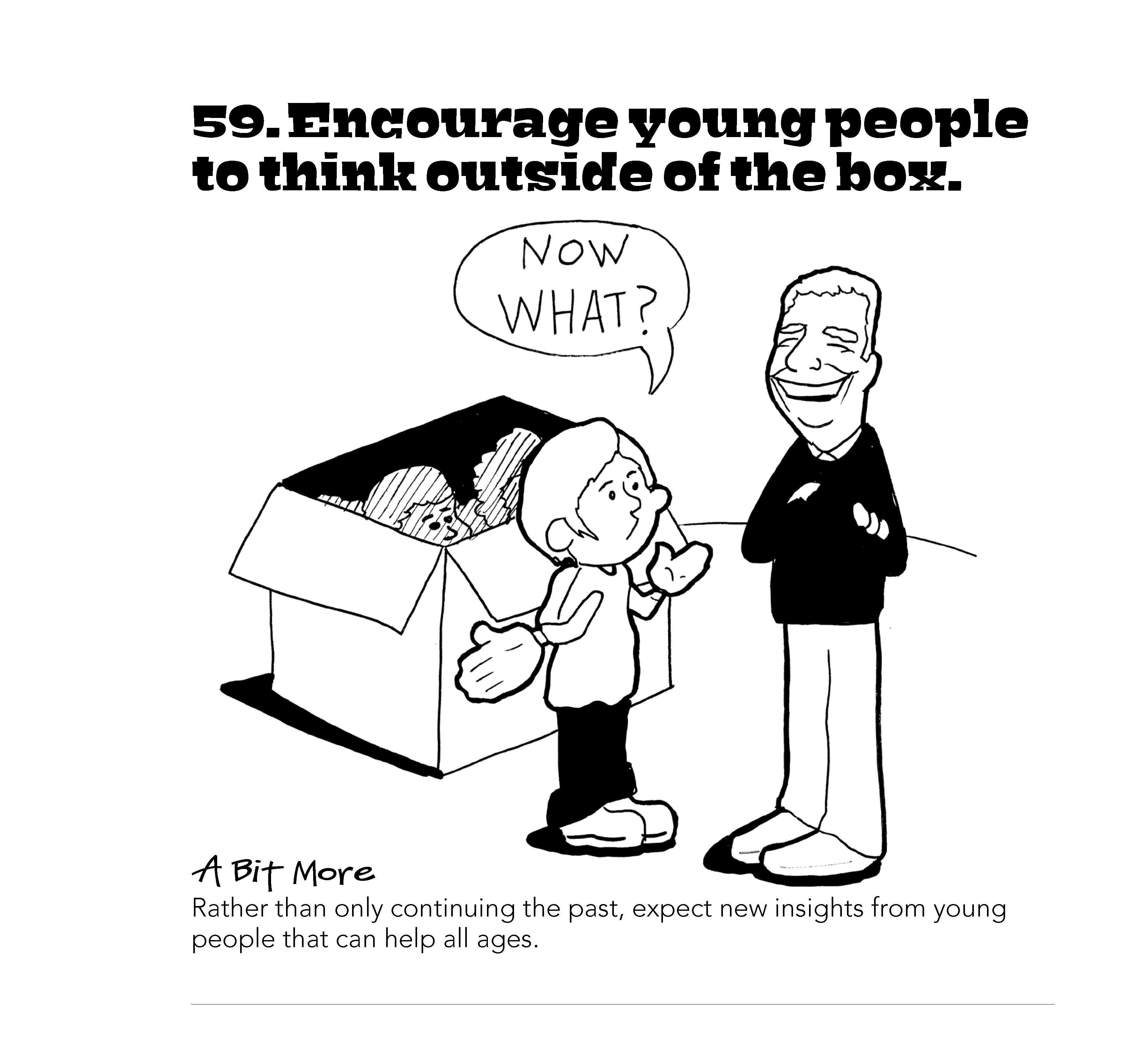
In Jesus’ day, the groom put on the wedding. This groom had an MC and a host to make sure everything was done right. But they didn’t anticipate six extra wedding guests who would drain them of their beverage supplies. It doesn’t appear that any of them knew about the crisis. Mary did. She told Jesus. Jesus gave some out-of-the-box instructions to the servants. They followed them, and the only thing that stood out was that the MC complimented the bridegroom on the superior wine. Jesus didn’t get any credit for it.
- Try that this week.
- See what you can do to help someone else and do it in a way so you don’t get the credit for it.
- This might be something at home or related to your school.
- You might have to give it some thought. Perhaps you’ll include another person to brainstorm with and carry out your thoughtful escapade.
- But do it without anyone knowing it was you, and without getting any credit for your good deed—just like Jesus.
- SO MUCH MORE
They ran out of wine. Jesus replenished the supply with more than 150 gallons of the best wine of the whole wedding. That’s like going from famine to feast; from drought to flood. Where can you go to give in abundance this week—the way Jesus gives?
- Maybe you can come up with some form of a “thank you” to someone. Instead of just saying, “Thank you,” one time, have it pop up in different ways throughout the week.
- You could also get more people to say, “Thank you,” such as your classmates joining you to thank a teacher that you and your classmates appreciate, but to whom you haven’t expressed that in quite a while. You could do a giant “Thank You” card and deliver it.
- Get creative and go overboard on something—Jesus’ style.
- IT’S A MIRACLE!
We often think of miracles happening in Bible times, but not today. Many people at the wedding had no idea the miracle had taken place. The main characters missed it. The servants and the new, young disciples noticed it. It led to an increased faith for them (John 2:11).
- See what miracle(s) you can spot this week.
- You might need to look in different ways if you aren’t the one who usually picks out miracles.
- Another way to do this is to start the day by asking Jesus to help you see (or be) a miracle, big or small, that day.
- At the end of the day, reflect on where you saw Jesus during the day.
- Then thank God for His miracle(s) and share them with others.
- Maybe they can help you spot other miracles as well.
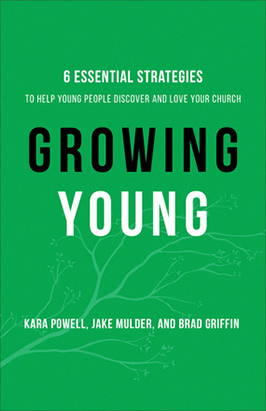
Growing Young
By Kara Powell, Jake Mulder, and Brad Griffin
The alarming reality of many churches today is that they have bare spots created by the youth and young adults missing from their congregation. Results from a Religious Landscape Study conducted by the Pew Research Center in 2007 and 2014 show a marked decline in church attendance and those who self-identified as Christians.
Few religious leaders have taken the time or done the research to discover what churches are doing right. However, Kara Powell, Jake Mulder, Brad Griffin and the research team at Fuller Youth Institute have put together a masterful, accessible work that documents how churches of all sizes, backgrounds, and denominations are effectively connecting with the next generation and have become bright spots.
In Growing Young the authors present their findings in ways that make it easy for church leaders to act. By identifying six fundamental commitments, strategic questions and ideas for action, this book provides a guide to help churches prevent common pitfalls and will result in a congregation that will Grow Young.