Scripture Passages
Serve God First
The story of Elijah and the widow of Zarephath presents a valuable lesson about how to experience overflowing blessings from God. When the widow of Zarephath served Elijah first, she unlocked the promised blessings from God that had no ending. Her flour and oil jars were never empty again, all because she obediently served God’s representative first. When we zoom out, we see that the whole deadly drought situation that was happening in the nation of Israel was due to the people not serving God faithfully. There was a plague of idol worship in the land, and people had allowed the traditions and rituals of Baal to replace the worship of the true God of heaven. Elijah’s interaction with the widow of Zarephath illustrates what all the people of Israel needed to do—serve God first and only, then God would pour out His merciful, unending blessings back onto His people.

OPENING ACTIVITY: PRIORITIES
Supplies: large bowl, large cylinder vase, large stones (or other large objects), small stones (or other small objects)
- Take the large cylinder vase and ask the youth to imagine that it is a symbol of their life.
- First place the large objects into the vase until it is mostly full. The large objects represent our relationship with God; our service to others in our families, neighborhoods, and churches; and our hope for eternal life in heaven.
- Next, talk about how the small objects are able to fill in the spaces around the large objects, but don’t pour them in yet. The small objects represent the things in our life that we sometimes let take up our time, attention, resources, and energy. The small objects are things like social media, movies, TV, music, sports, and entertainment. None of those things are necessarily bad, but they become a problem when they crowd out our commitment and service to God.
- Illustrate this by removing the large objects from the vase by placing them in the large bowl. Now pour the smaller stones (or small objects) into the vase until it is mostly full.
- Now show them how the big objects no longer will fit in the vase.
- Now, remove the small objects, add the large objects back in, and then pour the small objects around the large objects to completely fill the vase with both.
- It is important to keep God as number one in our lives!
- Discuss the following questions about the activity.
DISCUSSION
- God knows you need to do other things in life besides study the Bible, but why is it important to keep your relationship with God strong and in the first place in your life?
- What are some “large stones” that you want to keep as a priority in your life?
- What are some “small stones” that you see as part of your life? How will you keep those things from crowding out your faith in God and service to Him?
- What would your life look like if you were overcome with “small stones”?
- What would your life look like when you have your faith in God in first place?
- How does this illustration impact your perspective on what is happening in your life?
- Do you have the “big stones” in first place in your life? How can you determine to keep it that way? Or what changes do you think you should make to make room for the “big stones” in your life?
BIBLE STUDY GUIDE
Overflowing blessings
Read Luke 6:38.
38 Give, and it will be given to you. A good measure, pressed down, shaken together and running over, will be poured into your lap. For with the measure you use, it will be measured to you.”
DISCUSSION
- As Christians, serving others is a way that we follow Jesus’ example. What are some results we see when we give and serve others?
- Why do you think God required the widow of Zarephath to give food to Elijah first before caring for herself and her son?
- Have you seen something given back to you in response to your gift? How did that make you feel? Why do you think giving and receiving is a biblical idea?
- How does this verse change your perspective on giving?
- In what way can you give to others this week? What do you think will be the results if you do spend time serving or giving to others?
Abundant blessings
Read 2 Corinthians 9:8.
8 And God is able to bless you abundantly, so that in all things at all times, having all that you need, you will abound in every good work.
DISCUSSION
- What are some examples of abundant blessings from God?
- Why do you think the widow of Zarephath was willing to give her last food to Elijah? How does this story illustrate her faith?
- What are some of the good works that God is promising to abound in your life?
- This verse offers a promise very similar to what God did for the widow of Zarephath, providing everything she needs always. How do you see this promise fulfilled in your life?
Immeasurable blessings
Read Ephesians 3:20.
20 Now to him who is able to do immeasurably more than all we ask or imagine, according to his power that is at work within us, 21 to him be glory in the church and in Christ Jesus throughout all generations, for ever and ever! Amen
DISCUSSION
- When blessings are unending, they can’t be measured. What do you think it was like for the widow of Zarephath to continuously find more and more flour and oil in her jars?
- What are some immeasurable blessings in your life?
- What is the power that is at work within us?
- How was God’s power still working in the story of Elijah, and then later in his interactions with the widow of Zarephath, even though the people had become unfaithful idolators and there was a deadly drought in the area?
- How does God’s power and provision in Elijah’s life illustrate that He was in control the entire time?
- Take some time to think of ways God has done immeasurabley more than you have asked or imagined? Share with the group.

APPLICATION
The application for your life from today’s lesson is simple—Keep God first! The people of Israel had strayed and were adopting the behaviors and customs of the Baal worshipers. They were no longer worshiping the God of heaven and only Him. Elijah served as God’s messenger to bring change. The drought in the land was like a symbol of the drought of faith. People needed to remember who the true God is and return to faithfully trusting in Him. When the widow of Zarephath faithfully served Elijah food first, she served as an example of what all of Israel should do. And, when she was obedient, unending blessings were provided to her and her son. We will also experience God’s overflowing, abundant, and immeasurable blessings if we keep Him first!
SCRIPTURE PASSAGE
LEADER’S NOTE
For a Relational Bible Study (RBS) you’ll want to get into the Scripture passage and encourage the youth to imagine participating in the story while it’s happening. Then you will be able to better apply it to your own situation today.
You will need to ask God for the Holy Spirit to be present as your small group discusses the questions (no more than 3-6 people in a group is recommended). Start with the opening question. It is a personal question and the answer is unique for each individual. There is no right answer and nobody is an expert here, so don’t be surprised when you hear different responses. You are depending on the Holy Spirit to be present and to speak through your group. Say what God prompts you to say, and listen to what others share.
Take turns reading the chapter out loud. Follow that with giving the students some time to individually mark their responses to the questions (a PDF version of the handout is available as a download). This gives each person a starting point for responding when you start to share as a group. Next, begin the discussion by asking the students to share what they marked and why on each question as you work your way through. Feel free to take more time on some questions than others as discussion warrants.
Encourage each person in the group to apply what is discussed to their personal lives and to share with the group what they believe God wants them to do. Then ask them to pray that God will help each of them to follow through in doing so. Remind them to expect that God will show them ways to live out the message of this passage in the coming week, and that they are free to ask others in the group to help hold them accountable.
OVERVIEW
A familiar Bible story to many who grow up hearing stories from the Bible is the story of the courageous Elijah, who seemed to come out of nowhere and pronounce judgment on King Ahab. The first mention of the name Elijah (Yahweh is my God) comes at the beginning of our passage for this week—1 Kings 17.
Israel’s King Ahab married wicked Jezebel of the Phoenician area of Tyre and Sidon where Baal was the god of rain. Jezebel introduced this worship in Israel in direct contrast to the covenant that Yahweh had made to be the one, all-inclusive God of all for the Israelites. Worshiping Baal meant Yahweh was only one of the gods, not THE GOD.
When Elijah (Yahweh is my God) uttered his pronouncement to King Ahab that there would be no rain until Elijah would summon it, this served as a direct attack on Baal. If Baal was the rain god, wouldn’t that be up to Baal rather than to Elijah (or Elijah’s God)? Time would tell.
Nobody knows how Elijah obtained an audience with King Ahab; just that he did. And then Elijah disappeared. With such an audacious pronouncement, one might think that Elijah had a host of back-up. He did, but it was in Yahweh, who directed him to a little brook and then provided food by bird delivery—well before Uber Eats or Door Dash. Sometimes God’s miracles seem logical, and, at other times, they seem simply creative, as if God has a million different ways of doing something miraculous, but he chooses one that demonstrates something unique that only God could do.
After the water in the brook ran dry, instead of providing water out of a rock like he did for the Israelites in the desert, God sent Elijah out of the country to Zarephath—a city between the Phoenician cities of Tyre and Sidon (sound familiar?). Another unique story takes place there, one that requires faith in Elijah’s God. Even so, there is testing. Once again it has to do with food/water, as well as life and death. We have the extremes of daily life, day after day, and the miracles that sometimes seem obvious, and other times seem like normal life.
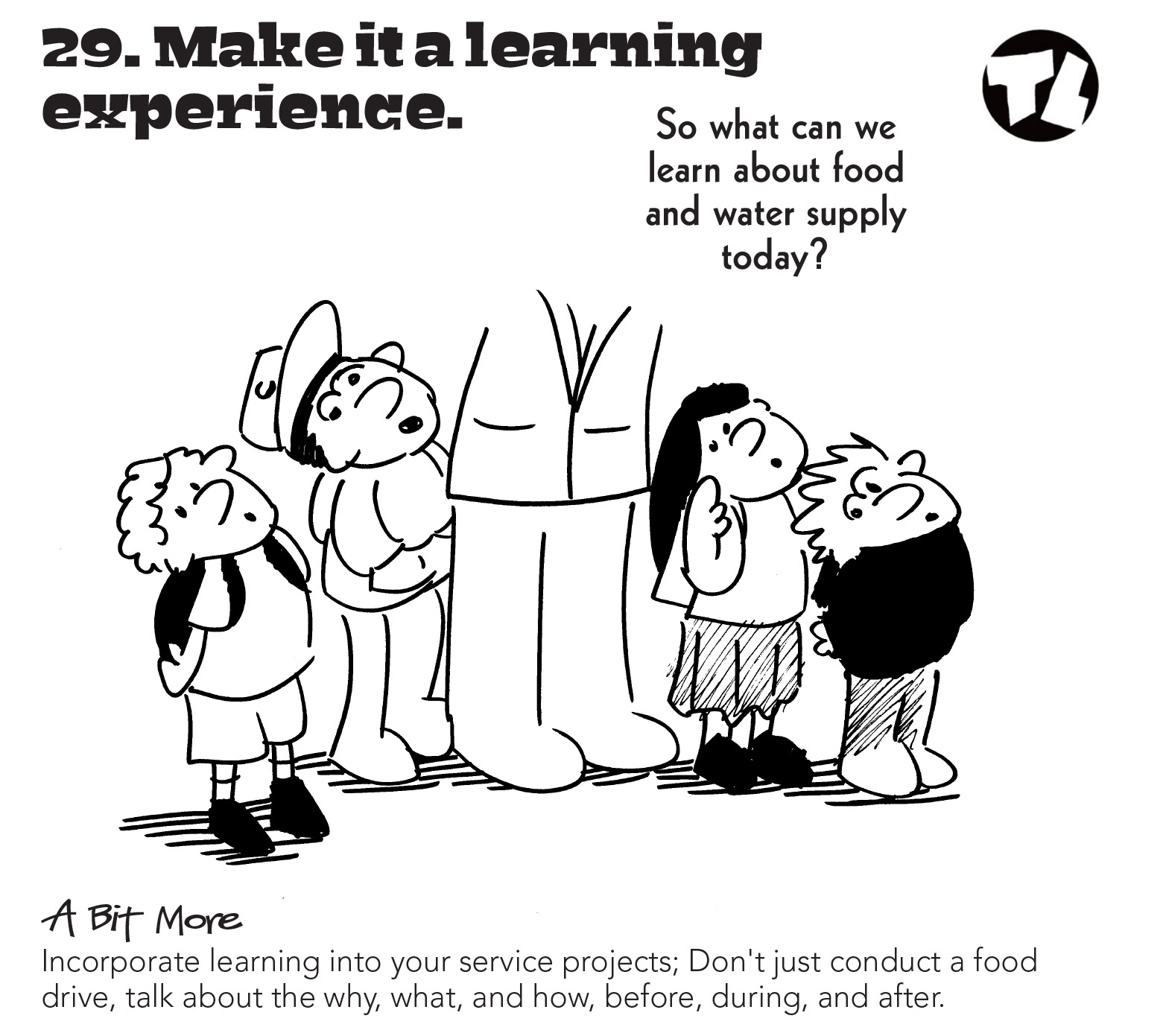
Food and Water
What’s your favorite food? What’s your favorite drink?
Read 1 Kings 17:1-24.
1. How would you describe Elijah?
- Bold.
- Crazy.
- Spiritual.
- An unknown person who came out of nowhere.
- God’s Messenger.
- King Ahab’s friend.
- Good-looking.
- Influencer.
- Other.
2. What was Elijah’s message?
- No rain for three years.
- No rain until I say.
- Your rain god, Baal, won’t be able to give you rain—powerless.
- Who will you worship—Yahweh or Baal?
- You won’t see me for a while.
- I’m not leaving until you repent.
- Return to Yahweh.
- Return to a closer family life ( Malachi 4:5-6 ).
- Other.
3. How did Elijah survive when he went into hiding?
- He wasn’t hiding.
- He had stockpiled food so he could survive on his own.
- He dug a well for water.
- Elijah trusted God to provide for him.
- He kept making fast-food runs.
- Birds brought him food; the brook provided running water.
- He prayed a lot.
- A bunch of other prophets were hiding with him ( 1 Kings 18:4 ).
- Other.
4. Why did Elijah go to Zarephath?
- That was his second home.
- It was better to be outside the land of Israel at that time.
- Ahab chased him there.
- God told Elijah to go there.
- A widow there needed Elijah in order for her to survive.
- This way Jesus could talk about it later ( Luke 4:25-26 ).
- Elijah had a message for the people of Zarephath.
- Other.
5. What testing did the widow face?
- Starvation.
- Trusting a stranger.
- Living in a pagan country.
- Serving Elijah before serving her son or herself.
- The death of her son.
- Trusting Elijah.
- Trusting Elijah’s God.
- Other.
6. Which of the following actions came from God? Which one(s) didn’t?
God’s Not God’s
Actions Actions
_____ _____ No rain.
_____ _____ Food for Elijah.
_____ _____ The brook drying up.
_____ _____ The widow running out of food.
_____ _____ The widow always having food.
_____ _____ The death of the widow’s son.
_____ _____ The resurrection of the widow’s son
_____ _____ Other.
7. Do you take a bold stand or run and hide—how do you decide which one to do?
8. Is it more challenging for your faith to live with unfaithful followers of God or with people who don’t believe in your God?
SUMMARY
Food and water are considered basic needs for life. Both come into question in this story. For courageous Elijah, God provides both in rather unique ways—something that demonstrates a daily reliance on God for the basics, as well as anything else. Following God means living for Him each day, even when those in power don’t. And you can expect tests in addition to wonderful surprises with miracles that are small and large.
APPLICATION
Even if you haven’t received a message from God to deliver to a king, God has provided us with many messages. Perhaps our challenge is to discern which message God has already given in the past that is the most potent and direct message for us today. As you rely on the Holy Spirit to discover this and to live it out, here are some ideas to put this week’s lesson into practice now.
- FOOD AND WATER.
- We often take for granted these basics. Where do you get your food and water? Is it just a matter of opening a cupboard or going to a pantry? Can you simply turn on a faucet and water pours out? Do you have bottled water readily accessible? Do you carry a water bottle with you most days? What is your source of physical food and water?
- Get specific. Is it given to you? Do you work for it? Are you responsible for making your own lunch, or do you purchase it?
- Compare notes with a friend. Compare notes with an adult. Compare notes with a younger child.
- Then ask the same questions about spiritual nourishment. Where do you get that? How do you get it? Who is responsible for it?
- Compare notes about this with those you talked to about physical food and water.
- TESTING.
The widow of Zarephath (we never get her name) faced a major test when Elijah told her to give him her last bit of food and then trust his God to provide more for her. What would lead you to take that risk? She certainly experienced a daily reward from that with flour and oil replenishment on a daily basis. Then her precious son died. What? Where was the God who provided the daily gifting of flour and oil? What good is a god who gives one thing, but takes away something even more significant?
- Go to someone in your church who is older than you and ask them how they have responded to tests in their life—small or big.
- Tell them the Youth Sabbath School has read of the story of Elijah and the widow of Zarephath, who gave her last meal to Elijah and later, whose son died and was brought back to life.
- Feel free to ask others how they face testing as well.
- Then pray that God will empower you to be faithful when you are tested.
- NAMING GOD’S ACTIONS .
People sometimes name a natural disaster like a hurricane, tornado, or flood an “act of God” which indicates it’s beyond human control. We can argue about whether God made it happen or if it was simply the “forces of nature.” Saying, “No more rain” on a clear day doesn’t seem impressive. But no rain for three years (and counting) makes a person wonder if there’s something to it. Consider big things and then little things that might be considered “acts of God.” We had it in 1 Kings 17. What are examples from your life?
- Add them to a collage where your Youth Sabbath School meets.
- Continue that through the month of March and see what you identify as “acts of God.”
The Miracle
Created By NAD Youth And Young Adult Ministries
What if the Miracles of Jesus are more than meets the eye?
What if there is so much more to each story than we see?
What if each time Jesus did something supernatural, He was inviting us to look deeper?
Beyond the healing.
Beyond the deliverance.
Beyond the acts that defied the laws of nature.
What if Jesus were inviting us to see something bigger?
Something more amazing about the love of God.
Something mind-blowing.
What if the ultimate Miracle is that God can transform us?
The Miracle Series is an interactive study of 15 of Jesus’ awe-inspiring encounters while here on earth. These lessons, and messages are designed to connect with teens and youth and take them on a journey of discovery. Included in this kit is everything you need:
- Small group scripts
- PowerPoint presentations
- Promotional video and files
- Participant Study Guides
We invite you and your youth to not just study the Miracles of Jesus but to experience The Miracle.