Scripture Passages
Overview
When my son and his friends play the Mario Brothers video game, there is a level where the character frequently becomes surrounded by a bubble. He needs a friend to pop the bubble in order to continue playing the game. As the players in that game need others around them to help them, we also need each other as we play this game of life. King Zedekiah recognized that he needed Jeremiah to tell him messages from the Lord. Unfortunately, Zedekiah did not follow the commands of God. He was disgraced and taken captive to Babylon. He and several other kings in our lesson this week had “game over” experiences because they made the wrong choices. What can we learn from their tragic stories? Let’s explore how we can follow God and trust Him to help us overcome discouragement, temptations, or other problems we face in this game of life.
Opening Activity: God In a Game
Supplies Needed: paper, pens, game
When we study the Bible, we find many object lessons that apply to our personal lives. Sometimes we open our Bibles during a time of discouragement and read a verse of God’s wisdom that answers the exact problem we are facing. Jesus used parables to teach and illustrate His gospel message. Humans have multi-dimensional abilities to feel, think, burn energy, imagine, and do creative things. Experiences we have in our lives and the objects around us can also teach us something about God. For the opening activity, attempt to discover a spiritual lesson or illustration from a game. Look around your house for a board game, or pick your favorite video game or computer game. Think about the structure of the game, the objective, how the game is won, and the obstacles. Write notes on what you observe, then consider sharing what spiritual truth you discovered on social media. Use the following questions to generate a discussion.
Questions
- How does this game reveal God?
- What obstacles do you have to overcome in this game? How do they illustrate sin, Satan, distractions, and temptations?
- What strategy do you need to win this game? What are some strategies we need to overcome sin?
- Does the game involve teams or individuals playing against each other? How does this mirror life?
- What are some spiritual object lessons that are not obvious about this game? Did you find a new perspective on your spiritual walk by studying this game at a deeper level?
- How would winning this game make you feel? How do you think being in heaven will feel?
Transition
Although Zedekiah’s, Jehoiakim’s, and Jehoiachin’s stories all ended in tragedy because they rejected God, our story does not have to end in ruin. In the lesson this week we found that several of the kings did evil in the sight of the Lord and turned away from Him. But, then Cyrus became king, and he made it his purpose to praise and glorify God while building a temple for Him in Jerusalem. We have plenty of opportunities to obey God’s Word. He wants us to choose to believe in Him, to follow Him, and to live the purpose He created us to serve.
Bible Study Guide
Read each Bible passage, then discuss the questions. If you are still worshiping from home, consider discussing one or more of the questions on social media, in a Zoom meeting, or in a group chat with friends.
Young, But Influential
Read 1 Timothy 4:12 (NIV).
12 Don’t let anyone look down on you because you are young, but set an example for the believers in speech, in conduct, in love, in faith, and in purity.
Questions
- Have you ever felt as if you have the rest of your life to be a Christian, so why bother now? Why or why not?
- Who were some of the Bible characters who were young and faithful to God?
- Who were some Bible characters who were young and not faithful to God?
- What advantages do young people have compared to people who are of retirement age?
- What contributions do you wish more young people were allowed to make in your church?
- How do young people live their Christian experience outside of church attendance?
- What does it mean to be young and Christian?
Christian Life Now
Read Ephesians 4:17-32 (NIV).
17 So I tell you this, and insist on it in the Lord, that you must no longer live as the Gentiles do, in the futility of their thinking. 18 They are darkened in their understanding and separated from the life of God because of the ignorance that is in them due to the hardening of their hearts. 19 Having lost all sensitivity, they have given themselves over to sensuality so as to indulge in every kind of impurity, and they are full of greed.
20 That, however, is not the way of life you learned 21 when you heard about Christ and were taught in him in accordance with the truth that is in Jesus. 22 You were taught, with regard to your former way of life, to put off your old self, which is being corrupted by its deceitful desires; 23 to be made new in the attitude of your minds; 24 and to put on the new self, created to be like God in true righteousness and holiness.
25 Therefore each of you must put off falsehood and speak truthfully to your neighbor, for we are all members of one body. 26 “In your anger do not sin”: Do not let the sun go down while you are still angry, 27 and do not give the devil a foothold. 28 Anyone who has been stealing must steal no longer, but must work, doing something useful with their own hands, that they may have something to share with those in need.
29 Do not let any unwholesome talk come out of your mouths, but only what is helpful for building others up according to their needs, that it may benefit those who listen. 30 And do not grieve the Holy Spirit of God, with whom you were sealed for the day of redemption. 31 Get rid of all bitterness, rage and anger, brawling and slander, along with every form of malice. 32 Be kind and compassionate to one another, forgiving each other, just as in Christ God forgave you.
Questions
- How can you know whether or not your actions are Christlike?
- If someone asked you what is a Christian, how would you answer?
- What are the principles in these verses that parallel the Ten Commandments?
- Evil will always seek to multiply like an infectious disease. How can you stop it from spreading?
- What does verse 27 mean when it says, “do not give the devil a foothold”?
- How could those evil kings we studied this week benefit from reading these verses?
- What makes being a Christian a positive experience for you today? What are some of the roadblocks you experience in your quest to be like Christ?
Soft or Hard Hearts
Read Acts 7:51 (NLT).
51“You stubborn people! You are heathen at heart and deaf to the truth. Must you forever resist the Holy Spirit? That’s what your ancestors did, and so do you!”
22 In the first year of Cyrus king of Persia, in order to fulfill the word of the Lord spoken by Jeremiah, the Lord moved the heart of Cyrus king of Persia to make a proclamation throughout his realm and also to put it in writing: 23 “This is what Cyrus king of Persia says: “‘The Lord, the God of heaven, has given me all the kingdoms of the earth and he has appointed me to build a temple for him at Jerusalem in Judah. Any of his people among you may go up, and may the Lord their God be with them.’”
Read James 1:22 (NIV).
22 Do not merely listen to the Word, and so deceive yourselves. Do what it says.
Questions
- How would you define stubbornness?
- Is being stubborn a sin? Are there times when it is good to be stubborn? Why or why not?
- How does Acts 7:51 summarize what was happening during the reign of Kings Zedekiah, Jehoiakim, and Jehoiachin?
- What does it mean to be heathen at heart and deaf to truth?
- What is the difference between listening and hearing? How can we take Bible lessons past the hearing experience into the listening and processing levels? Why does it matter?
- What made the difference in the life of King Cyrus? What do you think compelled him to do what was good and right?
- What role does the Holy Spirit have in our Christian experience?
- Do you believe the Holy Spirit is helping you make good choices? Why or why not?
- How can you imitate the attitude of King Cyrus in this “game of life”?
- What do you think losing the “game of life” would look like? What would winning the “game of life” look like?
Application
Even though this week’s lesson mostly covered kings who turned away from God and what happened when they dishonored Him, it is inspiring to read about King Cyrus. He chose to listen to God, and to have a purpose that brought honor and glory to God—building God’s temple in Jerusalem. He played the “game” of king successfully because He not only acknowledged God and gave thanks to Him, but honored God by his actions. Make the choice today to follow God and live out His mission in your life, too.
Consider doing one of the following:
- Keep a daily journal of object lessons you learn about God in your day-to-day life.
- Plant flower seeds in several pots. Once they are several inches tall, give them away. Think of how your spiritual life needs time, attention, and care to grow. Consider the fruit that grows in your life when you have a relationship with God.
- Pray that God will help you find a project or a goal to achieve which will bring honor to Him.
- Ask a friend to be your prayer partner. Pray together once each week.
- Make an obstacle course in your yard or create a fitness challenge to test your ability to complete a goal. Share this experience and any spiritual lessons you learned from it on social media.
- To illustrate what you believe is God’s mission for your life, make a vision board with magazine clippings, words, drawings, quotations, etc. Share a picture of it on social media.
Scripture Passages
Leader’s Note
For a Relational Bible Study (RBS) you’ll want to get into the Scripture passage and encourage the youth to imagine participating in the story while it’s happening. Then you will be able to better apply it to your own situation today.
You will need to ask God for the Holy Spirit to be present as your small group discusses the questions (no more than 3-6 people in a group is recommended). Start with the opening question. It is a personal question and the answer is unique for each individual. There is no right answer and nobody is an expert here, so don’t be surprised when you hear different responses. You are depending on the Holy Spirit to be present and to speak through your group. Say what God prompts you to say, and listen to what others share.
Take turns reading the chapter out loud. Follow that with giving the students some time to individually mark their responses to the questions (a PDF version of the handout is available as a download). This gives each person a starting point for responding when you start to share as a group. Next, begin the discussion by asking the students to share what they marked and why on each question as you work your way through. Feel free to take more time on some questions than others as discussion warrants.
Encourage each person in the group to apply what is discussed to their personal lives and to share with the group what they believe God wants them to do. Then ask them to pray that God will help each of them to follow through in doing so. Remind them to expect that God will show them ways to live out the message of this passage in the coming week, and that they are free to ask others in the group to help hold them accountable.
Be sure everyone takes time for personal applications before you end your Sabbath School time together.
Overview
Zedekiah found himself in a tough situation. Nebuchadnezzar had overrun Jerusalem twice already. Zedekiah, at 21 years of age, was king because Nebuchadnezzar had taken the previous monarchs of Judah as captives to Babylon (see 2 Chronicles 36). Zedekiah was a “puppet king” who had to oversee the people in Judah and report to Nebuchadnezzar. But the people of Judah wanted to be freed from Babylonian rule. They turned to the pagan gods of the surrounding nations, figuring that Yahweh hadn’t saved them (even though they had continued to persistently break their covenant with Yahweh).
Jeremiah’s messages from God were highly unpopular in Judah. Instead of repeating the popular messages of rebelling against Babylon, Jeremiah’s message from God was to submit to Babylon. No wonder the leaders and the people as a whole didn’t like Jeremiah’s prophecies. Do you want to be a prophet in that environment?
This week’s lesson includes Jeremiah 37, 38, and 39. We’ll cover just the first two chapters. Jeremiah 39 records the fall and destruction of Jerusalem, including burning God’s sanctuary to a pile of rubble—the magnificent sanctuary built by Solomon. (That’s worthy of another complete Relational Bible Study)!
(There are a lot of hard-to-pronounce names in this portion of Jeremiah. You might want to change the names to ones that are more familiar to people in your Youth Sabbath School. You could label them “King’s advisor 1” and “King’s advisor 2,” etc.)
Want to Be A Prophet?
Who is a person in authority you find it hard to obey?
Read Jeremiah 37:1-21 and Jeremiah 38:1-28
Jeremiah in Prison
37 Zedekiah son of Josiah was made king of Judah by Nebuchadnezzar king of Babylon; he reigned in place of Jehoiachin son of Jehoiakim. 2 Neither he nor his attendants nor the people of the land paid any attention to the words the Lord had spoken through Jeremiah the prophet.
3 King Zedekiah, however, sent Jehukal son of Shelemiah with the priest Zephaniah son of Maaseiah to Jeremiah the prophet with this message: “Please pray to the Lord our God for us.”
4 Now Jeremiah was free to come and go among the people, for he had not yet been put in prison. 5 Pharaoh’s army had marched out of Egypt, and when the Babylonians who were besieging Jerusalem heard the report about them, they withdrew from Jerusalem.
6 Then the word of the Lord came to Jeremiah the prophet: 7 “This is what the Lord, the God of Israel, says: Tell the king of Judah, who sent you to inquire of me, ‘Pharaoh’s army, which has marched out to support you, will go back to its own land, to Egypt. 8 Then the Babylonians will return and attack this city; they will capture it and burn it down.’
9 “This is what the Lord says: Do not deceive yourselves, thinking, ‘The Babylonians will surely leave us.’ They will not! 10 Even if you were to defeat the entire Babylonian army that is attacking you and only wounded men were left in their tents, they would come out and burn this city down.”
11 After the Babylonian army had withdrawn from Jerusalem because of Pharaoh’s army, 12 Jeremiah started to leave the city to go to the territory of Benjamin to get his share of the property among the people there. 13 But when he reached the Benjamin Gate, the captain of the guard, whose name was Irijah son of Shelemiah, the son of Hananiah, arrested him and said, “You are deserting to the Babylonians!”
14 “That’s not true!” Jeremiah said. “I am not deserting to the Babylonians.” But Irijah would not listen to him; instead, he arrested Jeremiah and brought him to the officials. 15 They were angry with Jeremiah and had him beaten and imprisoned in the house of Jonathan the secretary, which they had made into a prison.
16 Jeremiah was put into a vaulted cell in a dungeon, where he remained a long time. 17 Then King Zedekiah sent for him and had him brought to the palace, where he asked him privately, “Is there any word from the Lord?”
“Yes,” Jeremiah replied, “you will be delivered into the hands of the king of Babylon.”
18 Then Jeremiah said to King Zedekiah, “What crime have I committed against you or your attendants or this people, that you have put me in prison? 19 Where are your prophets who prophesied to you, ‘The king of Babylon will not attack you or this land’? 20 But now, my lord the king, please listen. Let me bring my petition before you: Do not send me back to the house of Jonathan the secretary, or I will die there.”
21 King Zedekiah then gave orders for Jeremiah to be placed in the courtyard of the guard and given a loaf of bread from the street of the bakers each day until all the bread in the city was gone. So Jeremiah remained in the courtyard of the guard. Jeremiah Thrown Into a Cistern
Jeremiah Thrown Into a Cistern
38 Shephatiah son of Mattan, Gedaliah son of Pashhur, Jehukal son of Shelemiah, and Pashhur son of Malkijah heard what Jeremiah was telling all the people when he said, 2 “This is what the Lord says: ‘Whoever stays in this city will die by the sword, famine or plague, but whoever goes over to the Babylonians will live. They will escape with their lives; they will live.’ 3 And this is what the Lord says: ‘This city will certainly be given into the hands of the army of the king of Babylon, who will capture it.’ ”
4 Then the officials said to the king, “This man should be put to death. He is discouraging the soldiers who are left in this city, as well as all the people, by the things he is saying to them. This man is not seeking the good of these people but their ruin.”
5 “He is in your hands,” King Zedekiah answered. “The king can do nothing to oppose you.”
6 So they took Jeremiah and put him into the cistern of Malkijah, the king’s son, which was in the courtyard of the guard. They lowered Jeremiah by ropes into the cistern; it had no water in it, only mud, and Jeremiah sank down into the mud.
7 But Ebed-Melek, a Cushite, an official in the royal palace, heard that they had put Jeremiah into the cistern. While the king was sitting in the Benjamin Gate, 8 Ebed-Melek went out of the palace and said to him, 9 “My lord the king, these men have acted wickedly in all they have done to Jeremiah the prophet. They have thrown him into a cistern, where he will starve to death when there is no longer any bread in the city.”
10 Then the king commanded Ebed-Melek the Cushite, “Take thirty men from here with you and lift Jeremiah the prophet out of the cistern before he dies.”
11 So Ebed-Melek took the men with him and went to a room under the treasury in the palace. He took some old rags and worn-out clothes from there and let them down with ropes to Jeremiah in the cistern. 12 Ebed-Melek the Cushite said to Jeremiah, “Put these old rags and worn-out clothes under your arms to pad the ropes.” Jeremiah did so, 13 and they pulled him up with the ropes and lifted him out of the cistern. And Jeremiah remained in the courtyard of the guard.
Zedekiah Questions Jeremiah Again
14 Then King Zedekiah sent for Jeremiah the prophet and had him brought to the third entrance to the temple of the Lord. “I am going to ask you something,” the king said to Jeremiah. “Do not hide anything from me.”
15 Jeremiah said to Zedekiah, “If I give you an answer, will you not kill me? Even if I did give you counsel, you would not listen to me.”
16 But King Zedekiah swore this oath secretly to Jeremiah: “As surely as the Lord lives, who has given us breath, I will neither kill you nor hand you over to those who want to kill you.”
17 Then Jeremiah said to Zedekiah, “This is what the Lord God Almighty, the God of Israel, says: ‘If you surrender to the officers of the king of Babylon, your life will be spared and this city will not be burned down; you and your family will live. 18 But if you will not surrender to the officers of the king of Babylon, this city will be given into the hands of the Babylonians and they will burn it down; you yourself will not escape from them.’ ”
19 King Zedekiah said to Jeremiah, “I am afraid of the Jews who have gone over to the Babylonians, for the Babylonians may hand me over to them and they will mistreat me.”
20 “They will not hand you over,” Jeremiah replied. “Obey the Lord by doing what I tell you. Then it will go well with you, and your life will be spared. 21 But if you refuse to surrender, this is what the Lord has revealed to me: 22 All the women left in the palace of the king of Judah will be brought out to the officials of the king of Babylon. Those women will say to you: “ ‘They misled you and overcame you—those trusted friends of yours. Your feet are sunk in the mud; your friends have deserted you.’ 23 “All your wives and children will be brought out to the Babylonians. You yourself will not escape from their hands but will be captured by the king of Babylon; and this city will be burned down.”
24 Then Zedekiah said to Jeremiah, “Do not let anyone know about this conversation, or you may die. 25 If the officials hear that I talked with you, and they come to you and say, ‘Tell us what you said to the king and what the king said to you; do not hide it from us or we will kill you,’ 26 then tell them, ‘I was pleading with the king not to send me back to Jonathan’s house to die there.’ ”
27 All the officials did come to Jeremiah and question him, and he told them everything the king had ordered him to say. So they said no more to him, for no one had heard his conversation with the king.
28 And Jeremiah remained in the courtyard of the guard until the day Jerusalem was captured.
1. Why didn’t Zedekiah and his leaders listen to God’s messages?
A. The messages were pretty negative.
B. They knew better than what Jeremiah shared.
C. Maybe the message wasn’t really from God.
D. They would lose power and influence if they followed it.
E. Other prophets were giving a different message.
F. God’s plan just didn’t match their plan.
G. The message simply wasn’t popular.
H. Jeremiah’s message seemed unlikely; the Babylonians had retreated.
I. Other.
2. Why ask for prayer when you don’t obey God anyway (vs. 3)?
A. It’s a good idea to cover your bases.
B. God doesn’t mind if we disobey.
C. Asking for prayer can be just a habit.
D. I feel God doesn’t listen to me; maybe He will listen to someone else.
E. God is supposed to be merciful and powerful.
F. I’m too far gone to ask for forgiveness.
G. It’s the right thing to do.
H. I’ve wondered the same thing.
I. Other.
3. Why would Zedekiah believe Jeremiah when the Babylonians had fled?
A. He shouldn’t have.
B. Jeremiah was God’s prophet.
C. This could really turn things around, and things were looking bad.
D. Jeremiah’s conviction inspired belief for Zedekiah.
E. The Babylonians kept coming back.
F. You can’t necessarily trust the Egyptians for protection.
G. God’s message is a good option when there isn’t much else.
H. Zedekiah just had a feeling that Jeremiah was right.
I. Other.
4. How did King Zedekiah relate to Jeremiah?
A. The king considered Jeremiah to be a true prophet of God.
B. The king didn’t know what to do with Jeremiah.
C. Jeremiah had given up on the king listening to God’s messages.
D. The king stayed in the court; Jeremiah stayed in prison.
E. They were best buddies.
F. The king hoped Jeremiah would give him a good message from God.
G. Jeremiah hoped the king would obey God.
H. It was a love/hate relationship, full of promises and threats.
I. Other.
5. Rank the person/s from this lesson you would trust, from highest (1) to lowest (8).
____ Zedekiah
____ Nebuchadnezzar
____ Pharaoh
____ Jeremiah
____ Zedekiah’s advisors and court officials
____ Ethiopian Ebed-melech
____ Judeans who had defected to Nebuchadnezzar
____ Other: _____________________________
6. Why did people throw Jeremiah in prison and want to kill him?
A. His persistent messages were so negative.
B. Jeremiah was misunderstood.
C. The king and his advisors lived in fear.
D. The leaders of the country needed a scapegoat.
E. Sometimes people are just hypersensitive.
F. Jeremiah was a spy for the Babylonians.
G. It’s common for people to resist God’s messages and messengers.
H. Other.
7. How is your life during the pandemic similar to Jeremiah’s life? How is it different?
8. What are God’s messages to you, and what types of suffering are you willing to put up with in order to follow them?
Summary
In spite of Judah’s history of ignoring and rebelling against Yahweh and the messages sent through the prophets, Zedekiah and his advisors, as well as the people of Judah, refused to listen and obey. Zedekiah seemed to occasionally want Jeremiah’s input, but he wouldn’t risk going all out for Yahweh. As a result, Zedekiah followed the crowd and he lost everything. That same temptation continues today. We don’t have to merely go with the flow of popular opinion, especially when God has already spoken and continues to send us messages.
Application
It might be easy to consider Jeremiah’s message more than 2,500 years ago to be irrelevant to us. But it’s still very true in many ways! Here are some potential applications for the members of your Youth Sabbath School to live out this passage of Scripture this week.
-
A MESSAGE FROM GOD
Get a message from God. Instead of keeping it a secret like King Zedekiah ( Jeremiah 38:24 ), share it with as many people as you can in the coming week. If you have difficulty finding messages from God, ask your Youth Sabbath School leader or your pastor. You can find many throughout the Bible. If you want to look in the book of Jeremiah itself, consider one of these as a message for you, and share with others this week:
-
COMPARE AND COMMIT
Take a message from God for you today (check your Bible, or see the seven passages above from Jeremiah for potential messages) and team up with another person from your Youth Sabbath School (or elsewhere). Compare God’s message with a current, popular message that seems to be the opposite of God’s message. Once you and your partner have found these contrasting messages, pray for the Holy Spirit to live through the two of you this week as you follow God’s message rather than the opposite, popular message. With your commitment, continue to pray and encourage each other during the week as you live out God’s message even though it might not be popular at this time.
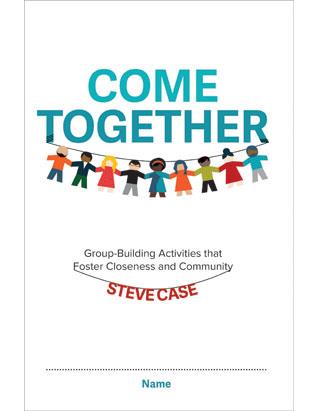
Come Together
By Steve Case
It’s great to be in a tightly-knit group, but getting to that point often proves challenging. Sometimes a simple game does the magic, but other times nothing seems to work. How does a group come together? Are there certain ingredients we can count on, or is it just hit-and-miss, better luck next time?
Although each group is unique, you can count on some key principles and follow a basic flow to foster closeness and community in your group—whether that’s with 5 people, 50, or 500.
Youth ministry veteran Steve Case has put together this “bag of tricks” which he collected over decades of experience. You may have seen, led, or possibly invented some of these activities, but now you have them arranged in a flow and with descriptions that will enable you to craft your own group-building experiences.