



Interact
After the video, prompts are supplied for thinking and sharing with others personal perception and experience. This opening activity prompts participants to think about and relate to the topic, and to share with others
Counterintuitive
Choose the two most counterintuitive actions from the list and explain why.
1. Sleep 7–9 hours instead of working late, because rest improves focus, memory, and long-term productivity.
2. Exercise regularly when tired, because movement increases energy rather than draining it over time.
3. Eat slower and stop before feeling full, which helps digestion and long-term health.
4. Spend time listening instead of trying to be heard, as understanding builds stronger relationships.
5. Ask for help when stuck, because collaboration often solves problems faster than working alone.
6. Focus on one task at a time, since multitasking lowers efficiency and quality.
7. Invest in a few deep relationships rather than many shallow ones, as depth creates stability and support.
The connection between the vine and branches feels natural and easy to understand, but the idea of cutting or pruning what is growing well seems counterintuitive.

Insight
The Bible discussion begins with a careful reading of the whole passage, either from your own Bibles, or from the provided images below.
Then participants are to ask:
- What is going on in this passage of Scripture?
- What are the key words and phrases? Highlight them.
- Why do you think this passage is included in the Bible?
- What does it contribute to our “knowing Christ” and “living in Christ”?
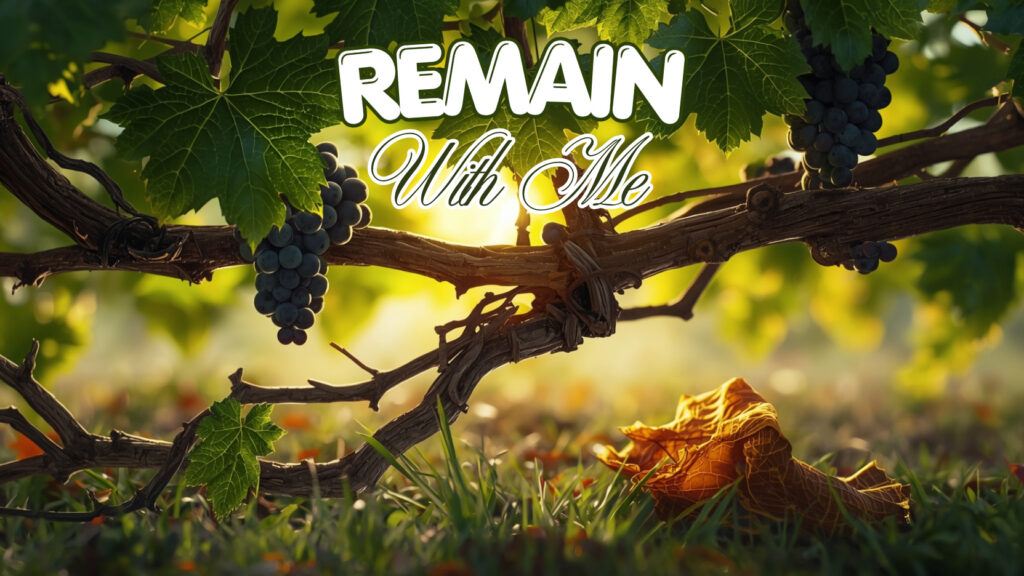
Whether or not you know much about growing grapes, the relationship in this image is clear. Jesus says, “I am the true vine,” which suggests there are other places people try to draw life from, sources that seem promising but do not last. The relationship between the vine and the branch is not built on striving or effort but on connection. Life flows from being joined to the vine. This is why He repeats the word “remain.” It describes a steady, ongoing life with Him. Connection is essential, yet the picture also includes something less natural, the cutting back of the vine.
Pruning is not only the removal of what is dead but the careful cutting of what is alive. It prepares the branch to grow again. What is cut back often looks strong, yet it can limit what the plant is meant to become. Hebrews describes this kind of discipline as something that later produces a harvest of righteousness (Hebrews 12:11). It is not pleasant in the moment, yet it carries purpose.
“Apart from me you can do nothing” is a hard truth. Growth cannot be produced apart from this connection. As Paul later writes, “Our competence comes from God” (2 Corinthians 3:5), which quietly reminds us that what appears to be our strength is, in the end, dependent on Him.

Insight Out
A parting video clip with a personal invitation to apply the message to “knowing Christ” and “living in Christ” in the coming week.