

Overview
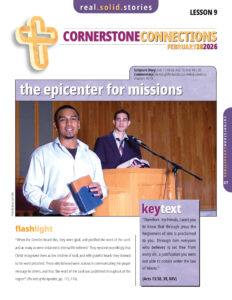
Can you imagine what a daunting task the early church may have felt to spread the gospel to the world? Well, actually, Luke doesn’t tell us that they viewed it as daunting at all! What is clear is that in the midst of persecution and hardships, these early believers were full of joy—and they were unstoppable. They were so infected with the love of Christ that their enthusiasm was contagious. When we speak of mission work today, we seem to feel the weight of all that needs to be done “so that we can go home.” But that attitude does not seem to exist in these chapters of Acts as we read of the lead-up to and the first missionary journey of Paul.
Scripture
Acts 13:38, 39
Discussion Video

Lesson 1
Scripture Passages
OVERVIEW
Have you ever wondered what it would have been like to be an explorer? To boldly go where nobody has gone before? Our lesson today is about just that—Barnabas and Paul are about to go on an adventure to spread the Gospel of Jesus to people who have never heard the story. This adventure will have conflict, intrigue, death threats, and all the other features of a great narrative, so grab your Bible and get ready to explore.
OPENING ACTIVITY:
REVERSE CHARADES
Supplies: List of Bible stories, action words, items, etc.
- Split into teams of three or more. Be creative (brown vs. blue eyes, right vs. left-handed, dark vs. milk chocolate lovers). Decide on a number of rounds or a point target to win.
- One item guessed correctly = 1 point. Each team has one minute to guess as many items as possible. If the acting team doesn’t like an item, they can pass, but only one pass per round.
- Each team selects a guesser (everyone gets a turn guessing) and the rest of the team acts out the words/items. The other team holds the word cards for only the actors to see. Each round is 60 seconds. Use a phone or watch timer.
- Talking or making noises is prohibited for the actors. Think of a silent movie.
- Keep score. The team with the most correct guesses wins.
QUESTIONS
- How was this different from traditional charades?
- In what ways was this easier or harder than having many people guessing and one person acting?
TRANSITION
It is said that a journey starts with one step. The journey of the Gospel being spread to the world started in Bethlehem and now has gone to the entire world. Barnabas and Paul embarked on a journey to share the Gospel to the Jews in Antioch and ended up sharing the Gospel with a much larger audience. Have you ever stopped to think about where your first step could lead you?
BIBLE STUDY GUIDE
Read Acts 11:19-21.
19 Now those who had been scattered by the persecution that broke out when Stephen was killed traveled as far as Phoenicia, Cyprus and Antioch, spreading the word only among Jews. 20 Some of them, however, men from Cyprus and Cyrene, went to Antioch and began to speak to Greeks also, telling them the good news about the Lord Jesus. 21 The Lord’s hand was with them, and a great number of people believed and turned to the Lord.
QUESTIONS
- What event caused the followers of Christ to scatter all over the world?
- Who was the Gospel preached to?
- How successful was Barnabas’ preaching?
Read Acts 13:1-3.
1 Now in the church at Antioch there were prophets and teachers: Barnabas, Simeon called Niger, Lucius of Cyrene, Manaen (who had been brought up with Herod the tetrarch) and Saul. 2 While they were worshiping the Lord and fasting, the Holy Spirit said, “Set apart for me Barnabas and Saul for the work to which I have called them.” 3 So after they had fasted and prayed, they placed their hands on them and sent them off.
QUESTIONS
- In what ways were Paul and Barnabas prepared before they were sent away?
- How is this preparation seen in the church today?
- In what ways should a church act in preparing people for service?
Read Acts 13:42-48.
42 As Paul and Barnabas were leaving the synagogue, the people invited them to speak further about these things on the next Sabbath. 43 When the congregation was dismissed, many of the Jews and devout converts to Judaism followed Paul and Barnabas, who talked with them and urged them to continue in the grace of God.
44 On the next Sabbath almost the whole city gathered to hear the word of the Lord. 45 When the Jews saw the crowds, they were filled with jealousy. They began to contradict what Paul was saying and heaped abuse on him.
46 Then Paul and Barnabas answered them boldly: “We had to speak the word of God to you first. Since you reject it and do not consider yourselves worthy of eternal life, we now turn to the Gentiles. 47 For this is what the Lord has commanded us:
“ ‘I have made you a light for the Gentiles, that you may bring salvation to the ends of the earth.’”
48 When the Gentiles heard this, they were glad and honored the word of the Lord; and all who were appointed for eternal life believed.
QUESTIONS
- Who did the Jews believe the Gospel was for?
- Why was this belief a controversy?
- As the Gospel is being preached today, which groups are being left out and why are they being left out?
- In our passage, the gentiles eagerly fell in love with Jesus. How are people responding today?
- How is Jesus relevant today?
- In what ways does being a follower of Christ impact how one lives?
Read Acts 14:8-18.
8 In Lystra there sat a man who was lame. He had been that way from birth and had never walked. 9 He listened to Paul as he was speaking. Paul looked directly at him, saw that he had faith to be healed 10 and called out, “Stand up on your feet!” At that, the man jumped up and began to walk.
11 When the crowd saw what Paul had done, they shouted in the Lycaonian language, “The gods have come down to us in human form!” 12 Barnabas they called Zeus, and Paul they called Hermes because he was the chief speaker. 13 The priest of Zeus, whose temple was just outside the city, brought bulls and wreaths to the city gates because he and the crowd wanted to offer sacrifices to them.
14 But when the apostles Barnabas and Paul heard of this, they tore their clothes and rushed out into the crowd, shouting: 15 “Friends, why are you doing this? We too are only human, like you. We are bringing you good news, telling you to turn from these worthless things to the living God, who made the heavens and the earth and the sea and everything in them. 16 In the past, he let all nations go their own way. 17 Yet he has not left himself without testimony: He has shown kindness by giving you rain from heaven and crops in their seasons; he provides you with plenty of food and fills your hearts with joy.” 18 Even with these words, they had difficulty keeping the crowd from sacrificing to them.
QUESTIONS
- Describe a time when you have seen a miracle.
- In this story, people drew the wrong conclusion about Paul’s status as a deity. What examples can you think of when people are doing the same thing today?
- How should a Christian act when God uses them to do great things?
Read Acts 14:19-20.
19 Then some Jews came from Antioch and Iconium and won the crowd over. They stoned Paul and dragged him outside the city, thinking he was dead. 20 But after the disciples had gathered around him, he got up and went back into the city. The next day he and Barnabas left for Derbe.
QUESTIONS
- What prepares a person so that when they are persecuted like Paul and Barnabas, they stay faithful to God’s calling on their life?
APPLICATION
Jesus has called His followers to share the Gospel to all humankind. Paul and Barnabas were willing to go when they were called. It wasn’t always easy or fun, but they went ahead and allowed God to use them. Are you willing to answer that call to go into your whole neighborhood, city, state, or a far-off county to share the message of a soon coming Jesus?
FOLLOW UP
1. Make a list of people or places in the town that you live in who need to know Jesus.
2. Pray that God will give you practical and realistic opportunities to share the Good News with those people.
3. Look for those opportunities and share the Good News in the unique ways as the Holy Spirit impresses you.
Lesson 2
Scripture Passage
LEADER’S NOTE
For a Relational Bible Study (RBS) you’ll want to get into the Scripture passage and encourage the youth to imagine participating in the story while it’s happening. Then you will be able to better apply it to your own situation today.
You will need to ask God for the Holy Spirit to be present as your small group discusses the questions (no more than 3-6 people in a group is recommended). Start with the opening question. It is a personal question and the answer is unique for each individual. There is no right answer and nobody is an expert here, so don’t be surprised when you hear different responses. You are depending on the Holy Spirit to be present and to speak through your group. Say what God prompts you to say, and listen to what others share.
Take turns reading the chapter out loud. Follow that with giving the students some time to individually mark their responses to the questions (a PDF version of the handout is available as a download). This gives each person a starting point for responding when you start to share as a group. Next, begin the discussion by asking the students to share what they marked and why on each question as you work your way through. Feel free to take more time on some questions than others as discussion warrants.
Encourage each person in the group to apply what is discussed to their personal lives and to share with the group what they believe God wants them to do. Then ask them to pray that God will help each of them to follow through in doing so. Remind them to expect that God will show them ways to live out the message of this passage in the coming week, and that they are free to ask others in the group to help hold them accountable.
OVERVIEW
These few verses of scripture tell of one of the greatest events in history. Now, for the first time, the gospel is deliberately preached to the Gentiles. Everything has been working up to this. There have been three steps on the ladder. First, Philip preached to the Samaritans; but the Samaritans after all were half Jewish and formed a bridge between the Jewish and the Gentile world. Second, Peter accepted Cornelius; but it was Cornelius who took the initiative. It was not the Christian church who sought Cornelius; it was Cornelius who sought the Christian church. Further, it is stressed that Cornelius was a God-fearer and, therefore, on the fringes of the Jewish faith. Third, in Antioch the church did not go to people who were Jews or half Jews, nor wait to be approached by Gentiles seeking admission; and without waiting for the invitation, it preached the gospel to the Gentiles. Christianity is finally launched on its world-wide mission.
The apostles sent Barnabas, the encourager, to check on the church in Antioch. In his customary Spirit-inspired way, he rejoiced at what the followers were doing. But he also discerned that they needed help in that secular city where political intrigue, cults, and sensuality abounded. Who could do that? Who had the intellectual training, Roman citizenship, and spiritual power to establish a strategic evangelistic effort in Antioch? Who but Saul of Tarsus?
Barnabas went to Tarsus to call the meditating Saul into active ministry. And the years of preparation had made him ready. His mind was alert with Christ, his thinking was fashioned around the mind of Christ, and his will was under the control of his new and indwelling Lord. Saul responded with vigor and enthusiasm, and the missionary team of Saul and Barnabas was formed.
They preached for a full year in the city of Antioch. It was a good place to begin. If they could win converts and establish a church there, anything was possible. The city was ranked third in prominence to Rome and Alexandria. It was called one of the best cities of Asia in the far-flung Roman Empire, and a Roman prefect was stationed there to assure the power of Rome in the area. The culture of the city was Greek. Cosmopolitan and metropolitan in spirit and size, it was also one of the most corrupt cities of the world. Ritual prostitution in the temple of Daphne characterized the sensual orientation of the morals of the city. And it was in that atmosphere that Paul began his ministry of preaching Christ!
It seems incredible but nonetheless it is true that it was in a city like this that Christianity took the great stride forward to becoming one of the prominent religions of the world. We need only think of that to be reminded that no situation is hopeless.
“Starter Skills . . . !”
Describe a time that you started something that was difficult.
Read Acts 11:19-26.
19 Now those who had been scattered by the persecution that broke out when Stephen was killed traveled as far as Phoenicia, Cyprus and Antioch, spreading the word only among Jews. 20 Some of them, however, men from Cyprus and Cyrene, went to Antioch and began to speak to Greeks also, telling them the good news about the Lord Jesus. 21 The Lord’s hand was with them, and a great number of people believed and turned to the Lord.
22 News of this reached the church in Jerusalem, and they sent Barnabas to Antioch. 23 When he arrived and saw what the grace of God had done, he was glad and encouraged them all to remain true to the Lord with all their hearts. 24 He was a good man, full of the Holy Spirit and faith, and a great number of people were brought to the Lord.
25 Then Barnabas went to Tarsus to look for Saul, 26 and when he found him, he brought him to Antioch. So for a whole year Barnabas and Saul met with the church and taught great numbers of people. The disciples were called Christians first at Antioch.
1. What happened to the Jews because of the stoning of Stephen?
- The people were very happy that he was gone.
- There was a national holiday in his honor.
- There was no effect, people just went about their lives.
- The people hunted the Romans to kill them.
- The Jews were scattered and preached to other Jews.
- Some of the people went to Phoenicia, Cyprus, and Antioch.
- The scattered people preached the gospel to Jews only.
- They all marched in the streets in protest of his stoning.
- There was a meeting to cast lots for his replacement.
- Other.
2. From where were the men who began speaking to the Greeks about Jesus?
- Tyre and Sidon.
- America and The Bahamas.
- Cyprus and Cyrene.
- Memphis and Philadelphia.
- Los Angeles and New York.
- Tennessee and Florida.
- Decapolis and Thessalonica.
- Rome and Bethlehem.
- Other.
3. How many people came to the Lord because of their ministry?
- 3,000.
- 5,000.
- 500.
- 3.
- Nobody believed; it was a wasted mission.
- 1,000,000.
- There was no number given, just a lot of people.
- 700.
- Other.
4. What did the church in Jerusalem do when they heard about the spread of the Gospel in Antioch?
- They all prayed for the company of believers.
- They offered money for them to further the cause.
- They sent Barnabas to encourage the believers there.
- Paul and Barnabas went there to baptize all the people.
- The church was afraid that the gospel was moving too fast.
- They gave some of the people awards for evangelism.
- They had a party to celebrate the success of the mission in Antioch.
- Other.
5. What did Barnabas do when he got to Antioch?
- He found an Applebee’s restaurant and went to dinner.
- He was very tired and went to sleep.
- He encouraged the people to remain true to Jesus.
- He set up a school of the prophets in Antioch.
- Barnabas was so happy to see the new converts, he danced for joy.
- He became full of the Holy Spirit and faith in Antioch.
- Barnabas baptized people at Antioch until he fell out with them.
- He was amazed at the power of God among the people in Antioch.
- Other.
6. What was the impact of Barnabas and Saul in Antioch?
- Evangelism.
- Discipleship.
- Antioch became a pioneer city for Christianity.
- Persecution.
- Famine.
- They set up a school of evangelism for the new Christians.
- Much restlessness.
- City leaders became afraid of their presence.
- Other.
7. What is God calling you to do to reach someone new for Him?
8. What can you do right now to be more connected to God?
SUMMARY
It is significant that the Lord chose this time and place to begin reaching the Gentile world. The church in Jerusalem had said “Yes!” to His inclusive guidance. The next step was on the way! And it was at Antioch that the followers of Christ were first called Christians. It was not the church’s idea. The people in Antioch coined the name. The suffix “ian” meant “belonging to” or “of the part of” or “a partisan of.” Indeed, they were all these, and more. The coined name was really a great compliment. Paul’s vital preaching of Christ, the new life “in Christ,” and the power of His indwelling as the secret of lasting joy and peace had led non-Jews, Greeks, Romans, rich and poor, prominent citizens and converted prostitutes into a strong and inclusive church.
It was so strong, in fact, that when a famine hit Jerusalem, and the church there was in desperate straits, it was the church at Antioch that sent an offering.
The first missionary offering was sent to the believers in Jerusalem by a church made up of the inclusive fellowship who saw the Lord’s will for the growing church. What an exciting time!
The new church had begun. No wonder they were called Christians. Perhaps for the first time their inclusive faith deserved the title!
APPLICATION
God blessed these sincere Christians, along with Paul and Barnabas, who were willing to share the gospel so that in Antioch a great number of people believed and turned to the Lord. The church erupted at Antioch, and a new thing happened. Here Jewish Christians aggressively took the gospel to Gentiles. The church began to turn the world upside down.
Below, find some application activities to reinforce this lesson. These are simply to provide ideas for your usage, or to invite you to imagine and create some of your own, as you impact the lives of teens for God’s glory.
- “Encoura-joggers”
- Create a jogging group made up of friends and a few new people.
- Read a creative version of your text, (The Message, NIV, or ESV).
- Have everyone share their thoughts on the passage.
- Then jog for 1, 2, or 3 miles (if you can go longer then go for it).
- At the end, share a light breakfast and encouraging words with all present.
- Interracial Faith Sharing
- Find someone in neighborhood, school, or within your social media network that is not of your race and faith.
- Befriend them and try to learn about their race and what makes them unique, and their faith unique.
- Then spend some time sharing aspects of your faith and race with them.
- Come to class ready to share your stories and what the experience was like.
- Get ready to be wowed by what you learn!
- Youth Evangelism
At the end of the weekend series, have a debriefing session and also talk about ways you can do this ministry at least once per year.
Plan a weekend evangelistic series for your youth group to share the word of God.
You may want to ask your youth or senior pastor for help.
Enlist all your class, youth group, Pathfinders, and AYM teams to help you plan and execute this weekend.