SCRIPTURE PASSAGE
OVERVIEW
Have you ever been told not to do something? For many that command only makes the situation worse. Being told not to do something provides motivation to do that activity—seems counterproductive, doesn’t it? Adam and Eve were given instructions on how to live in their new environment, but their happiness and contentedness didn’t last very long which brings up the question—why? Let’s take a look at our scripture passage and see what we can learn about human behavior.

OPENING ACTIVITY
Materials needed: Lego bricks
- Give each teen a few Lego bricks and tell them about the main theme for the Sabbath School lesson—this week the lesson is about the beginning of sin.
- Have everyone build an object with their Lego bricks that relates to the topic of today’s lesson.
- Set a time, such as 5 minutes, for them to build. Then ask each one to explain what they have built and why in 30 seconds.
TRANSITION
Have you ever watched a parent put a dent in a car? You have? Why didn’t you stop them? (Just kidding because accidents happen.) How did they feel afterward? Happy, sad, frustrated, angry, embarrassed? Ruining something usually isn’t a great experience and today’s lesson isn’t any different. Let’s join Adam and Eve in Genesis 3.
BIBLE STUDY GUIDE
Read Genesis 3:1-3.
Now the serpent was more crafty than any of the wild animals the Lord God had made. He said to the woman, “Did God really say, ‘You must not eat from any tree in the garden’?” 2 The woman said to the serpent, “We may eat fruit from the trees in the garden, 3 but God did say, ‘You must not eat fruit from the tree that is in the middle of the garden, and you must not touch it, or you will die.’ ”
QUESTIONS
- Make a list of the characters in this story.
- How was the serpent described?
- In what ways were Adam, Eve, and the serpent both different and alike?
- What command were both Adam and Eve given?
- Have you ever been faced with a choice between listening to a request from a parent or doing something they didn’t want you to do? Describe what happened (if you are comfortable doing so).
Read Genesis 3:4-7.
4 “You will not certainly die,” the serpent said to the woman. 5 “For God knows that when you eat from it your eyes will be opened, and you will be like God, knowing good and evil.”
6 When the woman saw that the fruit of the tree was good for food and pleasing to the eye, and also desirable for gaining wisdom, she took some and ate it. She also gave some to her husband, who was with her, and he ate it. 7 Then the eyes of both of them were opened, and they realized they were naked; so they sewed fig leaves together and made coverings for themselves.
QUESTIONS
- What does the serpent mean when he said that Adam and Eve’s eyes would be open?
- Adam and Eve haven’t been alive very long, so how would they know what evil was?
- Describe the roles of the characters in this section and explain who did the right thing.
- Why do you think Adam ate the fruit Eve gave him?
- Weren’t Adam and Eve always naked? What made the difference?
Read Genesis 3:8-13.
8 Then the man and his wife heard the sound of the Lord God as he was walking in the garden in the cool of the day, and they hid from the Lord God among the trees of the garden. 9 But the Lord God called to the man, “Where are you?”
10 He answered, “I heard you in the garden, and I was afraid because I was naked; so I hid.”
11 And he said, “Who told you that you were naked? Have you eaten from the tree that I commanded you not to eat from?”
12 The man said, “The woman you put here with me—she gave me some fruit from the tree, and I ate it.”
13 Then the Lord God said to the woman, “What is this you have done?”
The woman said, “The serpent deceived me, and I ate.”
- Why did Adam and Eve hide?
- Did God not know where Adam and Eve were? Explain.
- What would it be like to walk with God every evening?
- Define the word, “blame.”
- Why did Adam blame Eve?
- Why did Eve blame the serpent?
- Who did the serpent blame?
- Who really was to blame?
Read Genesis 3:14-19.
14 So the Lord God said to the serpent, “Because you have done this,
“Cursed are you above all livestock and all wild animals! You will crawl on your belly
and you will eat dust all the days of your life. 15 And I will put enmity between you and the woman, and between your offspring and hers; he will crush your head, and you will strike his heel.”
16 To the woman he said, “I will make your pains in childbearing very severe; with painful labor you will give birth to children. Your desire will be for your husband, and he will rule over you.”
17 To Adam he said, “Because you listened to your wife and ate fruit from the tree about which I commanded you, ‘You must not eat from it,’ “Cursed is the ground because of you; through painful toil you will eat food from it all the days of your life. 18 It will produce thorns and thistles for you, and you will eat the plants of the field. 19 By the sweat of your brow you will eat your food until you return to the ground, since from it you were taken; for dust you are and to dust you will return.”
QUESTIONS
- What major themes are found in this passage?
- Who got the worst bargain in this passage? Why?
Read Genesis 3:20-24.
20 Adam named his wife Eve, because she would become the mother of all the living.
21 The Lord God made garments of skin for Adam and his wife and clothed them. 22 And the Lord God said, “The man has now become like one of us, knowing good and evil. He must not be allowed to reach out his hand and take also from the tree of life and eat, and live forever.” 23 So the Lord God banished him from the Garden of Eden to work the ground from which he had been taken. 24 After he drove the man out, he placed on the east side of the Garden of Eden cherubim and a flaming sword flashing back and forth to guard the way to the tree of life.
QUESTIONS
- What does God mean in verse 22?
- How would the story have been different if God had let Adam and Eve stay in the garden?
- What kind of life would Adam and Eve have had if they would have been allowed to live forever?
- Describe the significance of the angels guarding Eden.

APPLICATION
The speed limit in a school zone is 25 miles per hour. What happens when you go faster than that? Why is the speed limit there so slow? The consequences of driving too fast in a school zone could be disastrous and costly which is why people are asked to go slowly. In Eden, Adam and Eve were given a warning not because God didn’t want them to have a good time; He wanted them to live their best life. When God’s original plan didn’t work out, God made a new plan which would ultimately save them. God didn’t leave Adam and Eve in their sin, but instead explained to them and showed them how life would ultimately be restored.
FOLLOW UP
This is the second Sabbath of the new year.
- How are your New Year’s resolutions coming along? Have you kept them all? Where is there need for improvement.?
- Read Jeremiah 29:11 .“For I know the plans I have for you,” declares the Lord, “plans to prosper you and not to harm you, plans to give you hope and a future.”
- God wants you to prosper.
- Make a list of the blessings you have discovered in the new year and thank God daily for what He is doing.
SCRIPURE PASSAGE
LEADER’S NOTE
For a Relational Bible Study (RBS) you’ll want to get into the Scripture passage and encourage the youth to imagine participating in the story while it’s happening. Then you will be able to better apply it to your own situation today.
You will need to ask God for the Holy Spirit to be present as your small group discusses the questions (no more than 3-6 people in a group is recommended). Start with the opening question. It is a personal question and the answer is unique for each individual. There is no right answer and nobody is an expert here, so don’t be surprised when you hear different responses. You are depending on the Holy Spirit to be present and to speak through your group. Say what God prompts you to say, and listen to what others share.
Take turns reading the chapter out loud. Follow that with giving the students some time to individually mark their responses to the questions (a PDF version of the handout is available as a download). This gives each person a starting point for responding when you start to share as a group. Next, begin the discussion by asking the students to share what they marked and why on each question as you work your way through. Feel free to take more time on some questions than others as discussion warrants.
Encourage each person in the group to apply what is discussed to their personal lives and to share with the group what they believe God wants them to do. Then ask them to pray that God will help each of them to follow through in doing so. Remind them to expect that God will show them ways to live out the message of this passage in the coming week, and that they are free to ask others in the group to help hold them accountable.
OVERVIEW
In Genesis 3, Eve encounters a snake in the garden who is crafty and cunning and lies to her, enticing her with the fruit of the knowledge of good and evil. He tells her, “You will not surely die. For God knows that in the day you eat of it your eyes will be opened, and you will be like God, knowing good and evil.” Revelation 12:9 and 20:2 describe Satan as being this serpent, and Satan deceived Eve. When she ate of the fruit, her eyes were opened but opened to the experience of sin and hurt as she and Adam discovered, firsthand, guilt and shame. Indeed, they did not surely (seem to) die…that day, but the entrance of sin caused them to be removed from the garden and eventually experience death. Some would say they did not physically stop breathing that day, but they did die spiritually as evidenced by the fact they started to hide from God rather than be drawn to Him. From that point forward, they would need to be “born again” to be restored to life.
When Adam and Eve hid after they sinned , God called out to Adam. It wasn’t because God didn’t know where Adam was. In the Bible, God doesn’t ask questions to obtain information as He knows everything (John 3:20), even the end from the beginning (Isaiah 46:10), and He knows what is within every human heart (1 Kings 8:39, Luke 16:15). He asked where Adam was so that he could reveal himself and acknowledge the shame and guilt that he and Eve felt.
When asked how he knew he was naked, Adam blamed Eve and Eve blamed the serpent. Neither of them were honest in accepting responsibility for their own actions in disobeying God. Sin brought shame, guilt, and fear into this world. As swiftly as evil entered this world, God had a plan for redemption and Genesis 3:15 alludes to a future when evil will end. Two things are introduced here: (1) the curse on mankind and (2) a Savior who will one day take that curse upon Himself (read Galatians 3 to see how Jesus fulfilled this).
In verse 22, Adam and Eve are removed from the garden so that they will not live forever and sin will not go on forever. Because of the sacrifice of Jesus on the cross, we can be forgiven from our sins when we choose to stop hiding from God, be honest with where we are, and ask Him for forgiveness from our sins and freedom from our shame, guilt and fear.
“Where Are You?”
How can you tell that someone is lying?
Read Genesis 3:1-13.
Now the serpent was more crafty than any of the wild animals the Lord God had made. He said to the woman, “Did God really say, ‘You must not eat from any tree in the garden’?”
2 The woman said to the serpent, “We may eat fruit from the trees in the garden, 3 but God did say, ‘You must not eat fruit from the tree that is in the middle of the garden, and you must not touch it, or you will die.’ ”
4 “You will not certainly die,” the serpent said to the woman. 5 “For God knows that when you eat from it your eyes will be opened, and you will be like God, knowing good and evil.”
6 When the woman saw that the fruit of the tree was good for food and pleasing to the eye, and also desirable for gaining wisdom, she took some and ate it. She also gave some to her husband, who was with her, and he ate it. 7 Then the eyes of both of them were opened, and they realized they were naked; so they sewed fig leaves together and made coverings for themselves.
8 Then the man and his wife heard the sound of the Lord God as he was walking in the garden in the cool of the day, and they hid from the Lord God among the trees of the garden. 9 But the Lord God called to the man, “Where are you?”
10 He answered, “I heard you in the garden, and I was afraid because I was naked; so I hid.”
11 And he said, “Who told you that you were naked? Have you eaten from the tree that I commanded you not to eat from?”
12 The man said, “The woman you put here with me—she gave me some fruit from the tree, and I ate it.”
13 Then the Lord God said to the woman, “What is this you have done?”
The woman said, “The serpent deceived me, and I ate.”
Read Genesis 3:22-24.
22 And the Lord God said, “The man has now become like one of us, knowing good and evil. He must not be allowed to reach out his hand and take also from the tree of life and eat, and live forever.” 23 So the Lord God banished him from the Garden of Eden to work the ground from which he had been taken. 24 After he drove the man out, he placed on the east side of the Garden of Eden cherubim and a flaming sword flashing back and forth to guard the way to the tree of life.
1. What does the serpent want Adam and Eve to do?
- Give all their money to the serpent.
- Eat all the fruits in the garden.
- Eat none of the fruits in the garden.
- Fight each other.
- Fight the serpent.
- Disobey God.
- Be like God.
- Help the serpent.
- Other.
2. What did it mean for Adam and Eve to be “like God”?
- To be loving people.
- To have access to eternal wisdom.
- To be the most powerful beings.
- To rule over the earth.
- To create new things.
- To read each other’s minds.
- To have magical powers.
- I’m not sure.
- Other.
3. After Adam and Eve disobeyed God, what did they see for the first time?
- Another world.
- Their nakedness.
- Shame.
- Different colors.
- Guilt.
- The serpent’s true form.
- Blame.
- Wisdom.
- Other.
4. Why did God ask Adam and Eve, “Where are you?”
- I’m not sure.
- He didn’t know where they were.
- He was playing hide and seek.
- The trees were too tall to see them.
- To give them the opportunity to confess.
- God likes asking rhetorical questions.
- He didn’t recognize them in their new clothes.
- Other.
5. When have you felt ashamed and tried to hide?
- When I got caught in a lie.
- When I cheated on an assignment or homework.
- When I blamed my sibling or friend for something bad I did.
- When I broke a valuable item that wasn’t mine.
- When I broke a promise.
- When I didn’t text a friend back.
- When I tripped in front of people.
- I’ve never felt ashamed.
- Other
6. When I apologize and I’m forgiven, I feel __________.
- I can move forward.
- Relieved that I don’t have to be ashamed.
- Closer to the one who has forgiven me.
- No change.
- A greater desire to be forgiving to others.
- I have to work to earn their trust again.
- Awkward.
- Other.
7. What is freeing about honesty?
8. When you feel ashamed, what promises of God remind you that He forgives, loves, and cares for you?
SUMMARY
In the garden, Adam and Eve were the first to experience the terrible effects of sin— it breaks relationships and destroys lives. Romans 5:6-21 brings this story full circle because it tells of how through one “Adam” (Hebrew word for “man”) came sin and how another “Adam” (or “a man”—in this case, Jesus) came and freed us from our sin. Romans 5:15 calls it a free gift.
Thousands of years later, Satan the serpent tries to deceive God’s people. One lie he tells them is that God will not love or forgive you again when you do wrong, but the Bible affirms again and again that He loves and is willing to forgive anyone that can be honest and repent of their sins. Acts 3:19 encourages us to, “Repent…that your sins may be blotted out, when the times of refreshing shall come from the presence of the Lord.” And 1 John 1:9 is a promise we can claim anytime that “if we confess our sins, He is faithful and just to forgive us our sins and to cleanse us from all unrighteousness.”
We are not powerless when it comes to temptation and to sin. The author of James 4:7 pens, “Submit yourselves therefore to God. Resist the devil, and he will flee from you.” When we submit ourselves to God continually, He has power to help us overcome temptation. And if we fall in sin, God is able and willing to lovingly forgive.
APPLICATION
- WHERE ARE YOU?
- When Adam and Eve disobeyed God, they hid from Him and God came to ask them where they were. It wasn’t because He didn’t know their location; He wanted to give the opportunity for them to reveal themselves and be honest about what they had done.
- Write a letter to God, answering His question to you today, “Where are you?” Where are you spiritually, emotionally, mentally?
- When we write, it solidifies a truth God already knows and we are able to fully surrender shame and stop trying to hide from Him. You can use the downloadable “Where are you?” journal to start.
- GOD’S WORD IN OUR HEARTS
King David wrote in Psalm 119:11, “I have hidden Your word in my heart that I might not sin against you.”
- This week, challenge yourself to memorize a truth about God’s forgiveness from your answer to Question 8 of the RBS handout, or choose one from the handout for this activity “God’s Word in Your Heart.”
- Ask your family and friends what their favorite texts are about God’s forgiveness.
- PRAY THROUGH THE WORD
- Choose a friend from class to share your verse with and ask them to share theirs with you.
- Then schedule two times to pray together this week that God would help you remember and practice these truths.
- SHAMELESS PLUG
- Find a worship song that reminds you of this week’s themes or of God’s forgiveness, love, or freedom from shame.
- Share this “shame”-less song in your main group chat or on your social media platform.
- Here are two examples we like:
- Amazing Love by Chris Tomlin
- Forgiven and Loved by Jimmy Needham
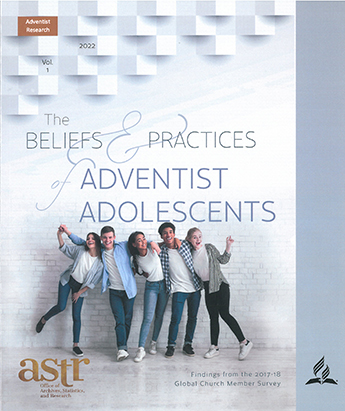
The Beliefs and Practices of Adventist Adolescents
Created by the General Conference Office of Archives, Statistics & Research
Do you want to know more about Adventist adolescents? So do we! It is so exciting to share the recent data from the 2017-18 Global Church Member Survey (GCMS) with you. This study encompassed 63,756 participants from 13 divisions; 7,490 of them (12% of the sample) were young people up to 20 years of age. Who are these Adventist adolescents? This book will tell us more about them. The data will shed light on key areas of their lives including where some improvements can help them continue to grow and thrive.